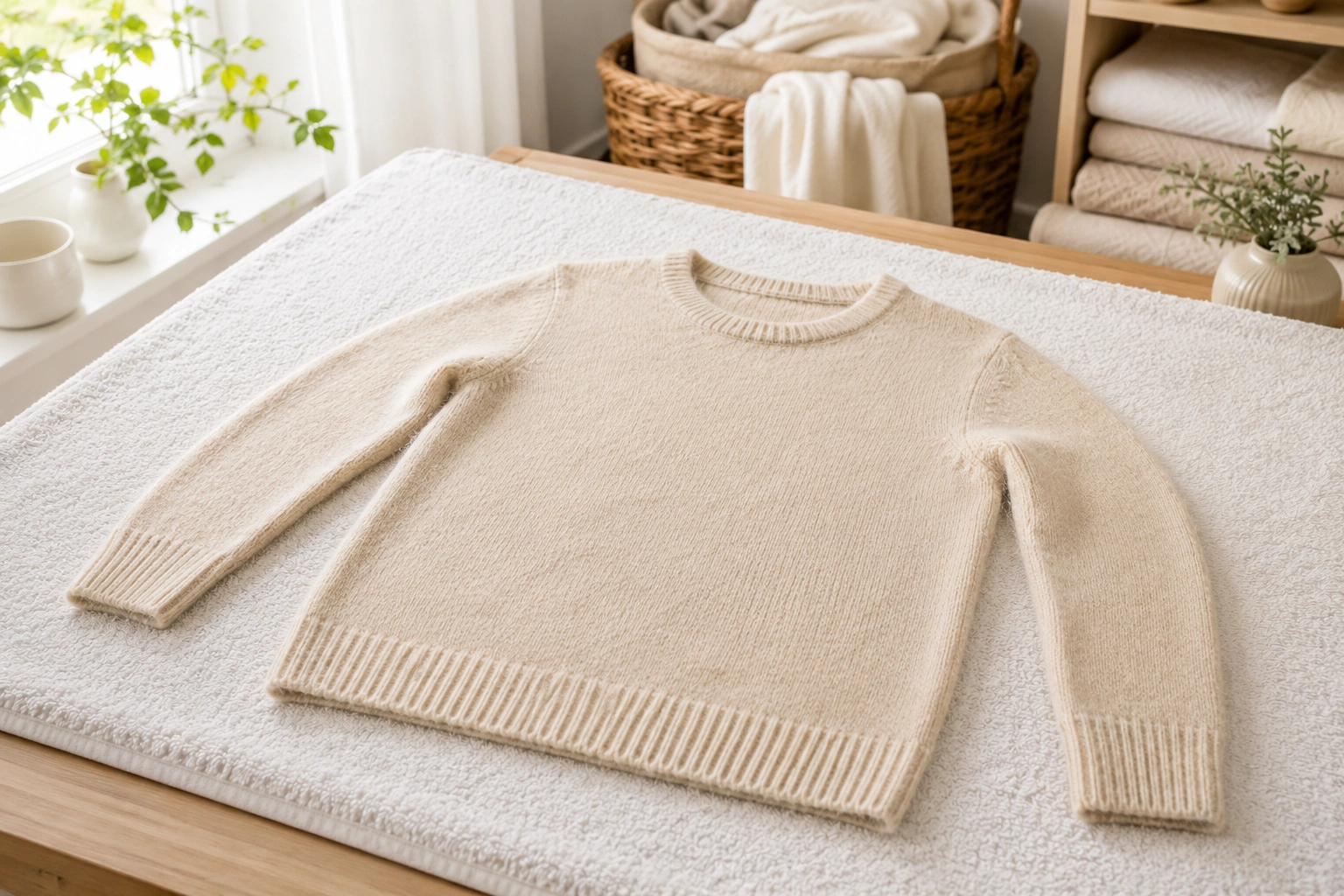
Why Do Sweaters Shrink?
Knitted fabric is made from interlocking loops of yarn. Those loops give a sweater softness and stretch, but they can tighten, felt, distort, or lengthen when exposed to the wrong combination of water, heat, friction, and gravity.
Animal fibers such as wool and cashmere need especially gentle handling because heat and agitation can cause their fibers to lock together. Cotton can shrink with excessive heat, while synthetic knits are more shrink-resistant but may still stretch, pill, or lose their shape.
Treat each sweater according to its care label and fiber content, not according to whatever else is already in the laundry basket.
Step 1: Check the Care Label
Before filling a sink or pressing a button, read the sewn-in care label. It tells you whether the sweater can be machine washed, should be hand washed, must be dry cleaned, or can tolerate tumble drying.
Check the fiber content, recommended water temperature, approved wash cycle, and drying instructions. In the United States, garment care labels are required to provide instructions for regular care or warnings when a particular cleaning method could harm the garment.
"Machine washable" does not mean "throw it in with jeans on a normal cycle". It means the garment can be machine washed under the conditions stated on the label. If the label says dry clean only, do not improvise because the internet made you feel brave.
Step 2: Prepare the Sweater
Turn the sweater inside out to reduce friction on the visible surface. Close buttons or zippers, remove detachable accessories, check pockets, and repair loose threads before washing.
Treat visible stains first. Blot rather than scrub, especially on wool or cashmere, and test any stain treatment on a hidden area.
Wash sweaters with similar colors and fabrics. Keep them away from heavy jeans, towels, hooks, and rough fasteners that can cause abrasion and pilling. Woolmark also recommends turning wool garments inside out before washing to help protect their appearance.
How to Hand Wash a Sweater
Hand washing is often the safest choice for wool, cashmere, loosely knitted garments, and anything marked "hand wash only".
-
Fill a clean sink or basin with cool or lukewarm water.
-
Add a small amount of mild detergent. Use a wool-safe detergent for wool or cashmere.
-
Submerge the sweater and gently press water through the fabric. Do not scrub, twist, or wring.
-
Soak it for about 10 minutes, unless the care label says otherwise.
-
Drain and rinse gently with water at a similar temperature.
-
Lift the sweater with both hands so the wet fabric is fully supported.
Woolmark’s hand-washing guidance recommends lukewarm water, a mild wool detergent, a short soak, and gentle rinsing rather than aggressive agitation.
To remove excess water, place the sweater flat on a clean towel. Roll the towel and sweater together, then press gently. Do not twist the roll. Repeat with a dry towel if the garment is still very wet.
How to Machine Wash a Sweater Safely
Machine washing is suitable only when the care label allows it.
Turn the sweater inside out and place it in a zippered mesh laundry bag. Select the wool, hand-wash, or delicate cycle. Use cold water or the temperature listed on the label, choose a low spin speed when available, and add only the recommended amount of mild detergent.
For machine-washable wool, Woolmark recommends the wool setting or, when that is unavailable, a cold-water or delicate cycle.
Wash a small, balanced load with similar soft items. Keep sweaters away from lint-heavy towels and rough garments.
When the cycle ends, remove the sweater promptly so it does not sit damp and crumpled in the washer, developing wrinkles and that forgotten-laundry smell humans somehow keep rediscovering.
The Most Important Step: Dry Sweaters Flat
Many sweaters survive washing and are ruined during drying.
Unless the care label specifically permits tumble drying, keep the sweater out of the dryer. Heat can shrink delicate fibers, while tumbling adds friction and may encourage pilling.
Lay the sweater on a clean, dry towel or mesh drying rack. Gently:
-
Align the shoulder seams
-
Straighten the sleeves
-
Smooth the body
-
Return the collar, cuffs, and hem to their original shape
-
Compare the sweater with its original measurements, if necessary
Avoid pulling hard on one area. The goal is to return the sweater to its natural shape, not stretch it into an entirely new garment.
Dry it flat in a well-ventilated area away from direct sunlight, radiators, and strong heat. Flip it over or replace the damp towel as needed.
Woolmark recommends flat drying wool sweaters and warns that hanging a wet knit can stretch it because of the weight of the trapped moisture.
Do not hang a wet sweater from a clothes hanger. The shoulders and body may stretch, leaving hanger bumps and a longer, narrower shape. Once the sweater is fully dry, fold it for storage.
Sweater Care by Fabric Type
Wool and Merino Wool
Some wool sweaters are machine washable and others are not, so the label wins.
Use a wool-safe detergent, cool or lukewarm water, minimal agitation, and flat drying. Turn wool garments inside out before washing and skip regular fabric softener. Woolmark advises avoiding fabric softener as one way to reduce pilling.
Cashmere
Hand wash cashmere in cool water with a mild wool or cashmere detergent. Press moisture out with a towel, reshape the sweater, and dry it flat.
Cashmere usually does not need washing after every wear. Airing it out between uses and wearing a clean layer underneath can help reduce the need for frequent washing.
Cotton
Cotton sweaters are sturdier than many wool knits, but high heat can still shrink them.
Use cold water, a gentle cycle, and flat drying when protecting the sweater’s fit is important. If the label allows machine drying, use the lowest approved temperature and check the garment frequently rather than roasting it until it has reconsidered its dimensions.
Acrylic and Synthetic Blends
Acrylic, polyester, and blended sweaters usually resist shrinking better than natural fibers, but heat and friction can still cause damage, static, or pills.
Wash these sweaters inside out on a gentle cycle with cool water, then follow the label’s drying instructions. Flat drying remains the safest option for preserving their shape.
Common Sweater-Washing Mistakes
Using Hot Water
Hot water may tighten natural fibers, fade color, and increase the likelihood of shrinkage.
Choosing a Normal or Heavy-Duty Cycle
Extra agitation is not extra care. It is simply more opportunity for fibers to rub, stretch, and pill.
Using Too Much Detergent
Excess detergent can remain trapped in dense knits, leaving the sweater stiff, dull, or difficult to rinse completely. Measure the detergent instead of pouring until the bottle feels emotionally satisfied.
Scrubbing Stains
Aggressive rubbing can fuzz the yarn, distort the knit, and leave a visible patch. Blot the stain gently and use a treatment that is appropriate for the sweater’s fiber.
Wringing Out Water
Twisting stretches wet loops and may permanently change the sweater’s shape. Press moisture out with a towel instead.
Hanging a Wet Sweater
Gravity will do exactly what gravity does. Support the entire garment and dry it flat.
Drying by Optimism
The care label, not confidence, decides whether tumble drying is safe.
Can You Unshrink a Sweater?
A slightly shrunken sweater may be improved, but there is no guaranteed reset button.
Re-wet the sweater in cool or lukewarm water, press out moisture without wringing, and lay it flat on a towel. Gently ease the fabric toward its original dimensions a little at a time.
Work evenly across the body and sleeves instead of pulling hard in one place. Let the sweater dry flat in the corrected shape.
This may help fibers that have tightened slightly. It is less likely to restore wool that has become heavily felted, dense, or dramatically smaller. Prevention remains cheaper than turning a beloved sweater into an experimental textile project.
How Often Should You Wash Sweaters?
Sweaters usually do not need washing after every wear.
If a sweater is not stained or odorous, air it out before folding it. Wearing a clean base layer can also reduce contact with sweat, deodorant, and skin oils. Wool in particular may require less frequent washing because of its natural odor- and stain-resistant properties.
Wash a sweater when it is visibly dirty, smells stale, or is ready for seasonal storage.
Always clean knitwear before storing it because old food, oils, stains, and odors can become harder to remove. Fold sweaters instead of hanging them so they retain their shape during storage.
Between washes, remove pills carefully with a sweater comb or fabric shaver. Do not pull them if doing so tugs at the yarn.
Your Quick Sweater-Washing Checklist
Before washing:
-
Read the care label
-
Check the fiber content
-
Turn the sweater inside out
-
Treat stains gently
-
Separate it from rough items
During washing:
-
Use cool or lukewarm water
-
Choose a mild detergent
-
Limit agitation
-
Use a mesh bag for machine-washable knits
-
Follow the approved cycle
After washing:
-
Support the wet sweater
-
Press out water with a towel
-
Reshape it while damp
-
Dry it flat
-
Keep it away from heat and direct sunlight
That is the entire strategy. Sweaters do not require magic. They require restraint, which is apparently the harder household skill.
Make Laundry Day Easier With Tip Top Laundry
Knowing how to wash sweaters without shrinking them protects your wardrobe and helps your favorite knits last longer.
For the rest of the laundry pile, Tip Top Laundry offers clean self-service machines, attended wash-and-fold options, and convenient pickup and delivery for customers in Glendale, Phoenix, Peoria, and communities across the West Valley.
For special-care sweaters, check the label and share any fabric-care instructions before service. For everyday laundry, schedule a pickup or visit Tip Top Laundry in Glendale, Arizona, and reclaim the hours your laundry basket has been quietly stealing.