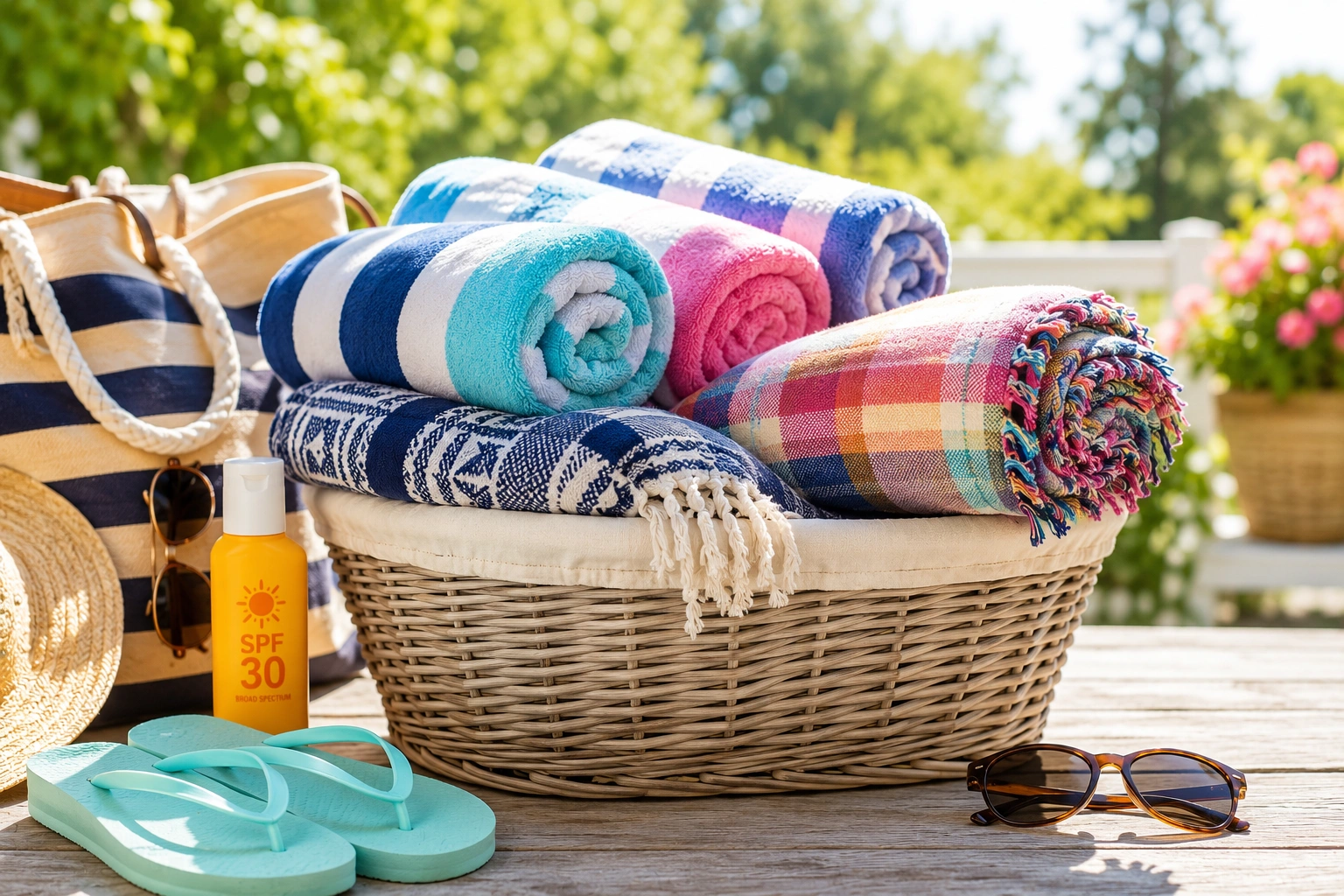
Start by Shaking Everything Out
Before anything goes near the washing machine, take it outside and shake it out thoroughly. Beach towels, picnic blankets, and outdoor throws can hold a surprising amount of sand, dirt, leaves, grass, and snack debris. Washing these items without removing loose particles first can make your washer work harder and may leave gritty residue behind.
For large blankets or patio fabrics, hang them over a railing, clothesline, or fence and give them a firm shake. Use a soft brush or handheld vacuum for stubborn dirt, dried mud, crumbs, or pet hair. This step only takes a few minutes, but it makes the actual wash much more effective.
Check the Care Label First
Outdoor fabrics are not all made the same. Some are cotton, some are microfiber, some are fleece, some are canvas, and some are treated with water-resistant or UV-protective coatings. Before washing, check the care label for temperature limits, drying instructions, and warnings about bleach or fabric softener.
This is especially important for patio cushion covers, outdoor furniture fabrics, waterproof picnic blankets, and performance towels. Hot water or high heat drying can damage coatings, shrink fabric, or weaken fibers. When in doubt, use cold or warm water, a gentle cycle, and low heat or air drying.
Pre-Treat Summer Stains
Summer stains deserve their own category of chaos. Sunscreen, barbecue sauce, grass, mud, sweat, fruit juice, ice cream, and pool chemicals all cling to fabric differently. The sooner you treat stains, the better your results will be.
For food stains, gently scrape off any excess before applying a stain remover or a small amount of liquid laundry detergent directly to the spot. Let it sit for 10 to 15 minutes before washing.
For grass stains, use a stain remover or detergent and gently rub the fabric together. Avoid aggressive scrubbing, especially on delicate or coated outdoor fabrics.
For sunscreen stains, pre-treat with liquid detergent because many sunscreens contain oils that can cling to fibers. Avoid chlorine bleach unless the care label clearly says it is safe.
For mildew smells or damp towel odor, wash items as soon as possible. Letting wet towels sit in a pile is basically an invitation for odor to move in, unpack, and ruin everyone’s day.
Wash Towels Separately from Blankets and Outdoor Fabrics
Beach towels, pool towels, and sports towels should usually be washed separately from heavier blankets or delicate outdoor fabrics. Towels release lint, absorb a lot of water, and need enough room to rinse properly. Heavy blankets can prevent towels from moving freely in the washer, leading to poor cleaning and detergent buildup.
Use warm water for cotton towels when the care label allows. Cold water works well for bright colors, microfiber towels, and items that may shrink. Choose a quality detergent and avoid using too much. More detergent does not mean cleaner laundry. It usually means residue, stiffness, and towels that feel like they have given up emotionally.
Skip fabric softener on towels. Fabric softener can coat towel fibers and reduce absorbency over time. For fresher towels, use the right amount of detergent, avoid overloading the washer, and dry them fully before folding.
How to Wash Beach Towels
Beach towels collect sand, salt, sweat, sunscreen, and sometimes a faint aroma of “forgotten in the trunk.” To wash them properly, shake them outside first, then wash in warm or cold water depending on the fabric and color.
Use a regular or heavy-duty cycle for cotton beach towels, but avoid overloading the washer. Towels need space to move so water and detergent can flow through the fibers. If towels smell musty, run them through a wash cycle promptly and dry them completely. Damp towels left in a basket can develop mildew odor quickly.
Dry beach towels on medium heat if the care label allows. Remove them once dry to prevent roughness and over-drying. For extra freshness, line drying in the sun can also help, though bright towels may fade over time if they are dried in direct sunlight too often.
How to Wash Picnic Blankets
Picnic blankets can be tricky because many have different materials on each side. One side may be soft fleece or cotton, while the other may have a water-resistant backing. Always check the care label before washing.
Start by removing crumbs, dirt, grass, and leaves. Pre-treat food stains before placing the blanket in the washer. Use cold water and a gentle cycle for waterproof-backed blankets or delicate materials. Avoid bleach and fabric softener unless the care label approves them.
Air drying is often best for picnic blankets with water-resistant backing. High dryer heat can damage the backing, cause cracking, or reduce water resistance. Hang the blanket over a line or drying rack until completely dry before storing.
How to Wash Outdoor Blankets and Throws
Outdoor blankets used for camping, bonfires, sporting events, or patio lounging often pick up smoke smells, dirt, sweat, and pet hair. Shake them out first, then brush or vacuum off loose debris.
Wash fleece, cotton, or synthetic outdoor blankets according to the care label. Cold or warm water is usually safest. Use a mild detergent and avoid overloading the washer, especially with bulky blankets. If the blanket is oversized, it may need a commercial-size washer to clean properly.
Dry on low heat or air dry. High heat can damage synthetic fibers and cause some blankets to lose softness. Make sure the blanket is fully dry before storing to prevent mildew.
How to Clean Patio Cushion Covers and Outdoor Fabrics
Patio cushion covers and outdoor fabrics often need a gentler approach than towels. Many are designed to resist moisture, fading, or stains, and harsh washing can reduce those protective qualities.
Remove cushion covers if they are machine washable. Brush off loose dirt and pollen, then pre-treat stains gently. Wash with cold water on a delicate cycle using mild detergent. Avoid bleach unless the label specifically allows it.
If the fabric is not removable or not machine washable, spot clean it with mild detergent and water. Use a soft brush or cloth, rinse with clean water, and let the fabric air dry fully. Never put foam cushion inserts into a washing machine unless the manufacturer says it is safe. Foam can trap water and take a long time to dry, which can lead to mildew.
Remove Odors Before Storing Summer Fabrics
At the end of summer, do not store towels, blankets, or outdoor fabrics unless they are completely clean and dry. Storing items with sweat, sunscreen, food residue, or moisture can cause yellowing, mildew, and unpleasant odors.
Wash everything before packing it away. Dry thoroughly, then fold loosely and store in a cool, dry place. Avoid sealing damp or recently used fabrics in plastic bins without airflow. If you use storage containers, make sure the items are completely dry first.
For seasonal items, breathable cotton storage bags can help reduce trapped moisture. Add a clean, dry scent sachet if desired, but skip anything oily or heavily perfumed that could stain fabrics.
Common Mistakes to Avoid
One of the biggest mistakes is overloading the washer. Outdoor fabrics are often bulky, and they need room to move. A packed washer leads to uneven cleaning, poor rinsing, and detergent residue.
Another mistake is using too much detergent. This can make towels stiff and cause buildup on blankets and outdoor fabrics. Measure detergent based on load size and soil level.
High heat is another common problem. While it may seem like the fastest way to dry bulky summer items, high heat can shrink cotton, damage waterproof backing, weaken elastic, and harm synthetic fibers. Use low or medium heat when appropriate, and air dry coated or delicate fabrics.
Finally, avoid ignoring stains until next season. Future you does not want to open a storage bin and discover last July’s barbecue sauce fossilized onto a blanket. Future you has suffered enough.
When to Use Professional Laundry Service
Some summer items are simply too bulky, delicate, or heavily soiled for a home washer. Oversized outdoor blankets, large patio cushion covers, heavy beach towel loads, and post-vacation laundry piles can be difficult to clean at home.
Tip Top Laundry can help make summer cleanup easier with professional washing and drying services designed to handle everyday laundry and bulky seasonal items. Instead of spending your weekend fighting sand, mildew smells, and towel mountains, you can get fresh, clean fabrics without turning laundry into your second job.
Keep Summer Fabrics Fresh All Season
The best way to care for outdoor towels, blankets, and fabrics is to wash them regularly, dry them fully, and store them properly. Shake out debris before washing, pre-treat stains, follow care labels, and avoid harsh heat or unnecessary fabric softeners.
With the right laundry habits, your beach towels stay absorbent, picnic blankets stay fresh, outdoor throws stay soft, and patio fabrics stay ready for whatever summer throws at them next. And because summer already comes with sunburns, traffic, and people arguing over who forgot the cooler, clean laundry should at least be the easy part.