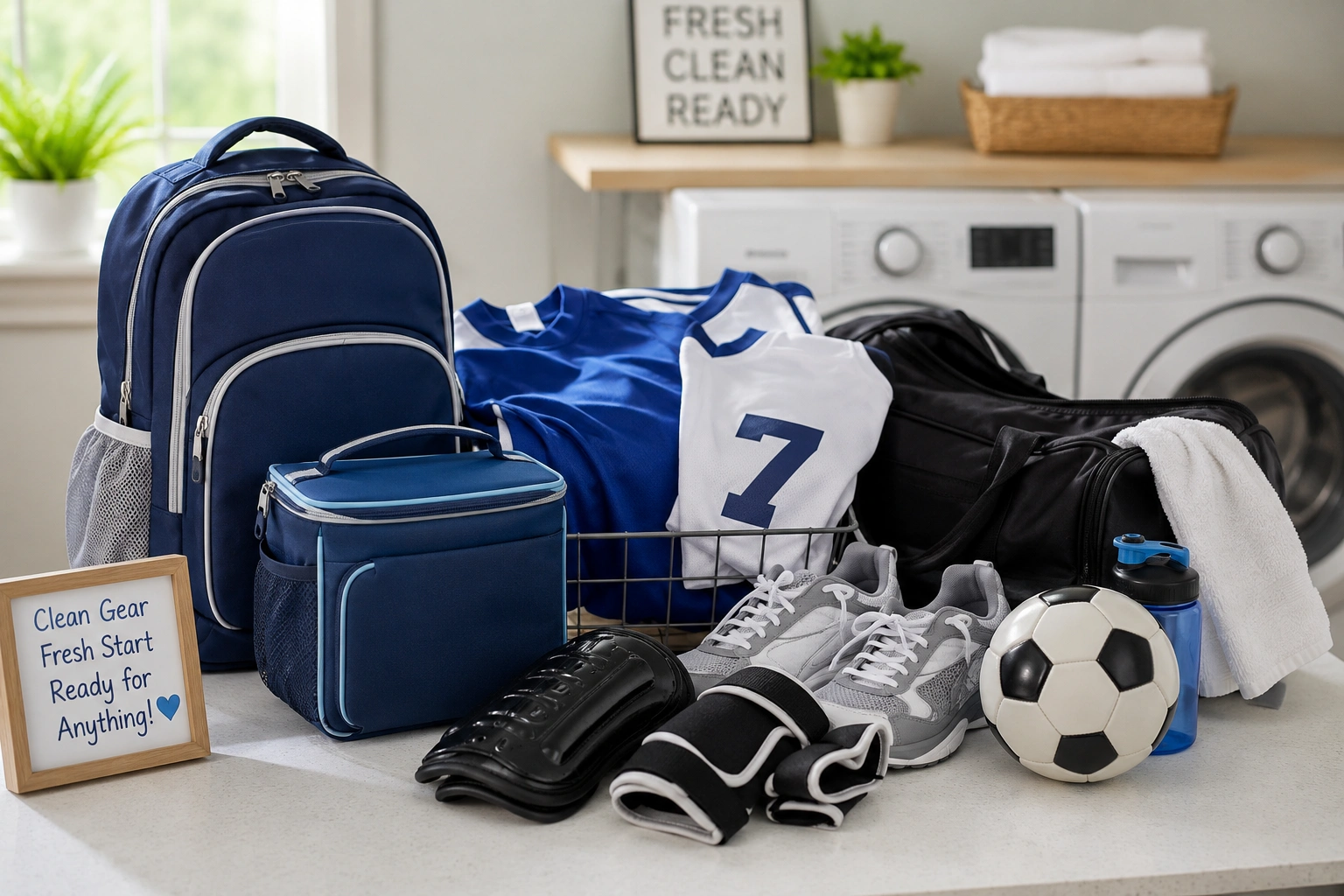
Start by Checking the Care Label
The care label is your first clue. Look inside the backpack, along a lunch bag seam, or under a tag on sports gear. Some items are machine washable, while others are spot-clean only. If the label says "hand wash", "do not tumble dry", or "wipe clean only", believe it.
If there is no label, use the safest route: cold water, mild detergent, gentle cleaning, and air drying. Avoid bleach unless the item is plain white and the care label specifically allows it. Bleach can weaken fibers, damage waterproof coatings, and leave colored gear looking permanently sad.
How to Wash a Backpack
First, empty every pocket. Check pencil slots, side compartments, hidden zipper sections, and the tiny pocket that seems designed only to trap crumbs and old receipts. Remove loose dirt by shaking the backpack outside or vacuuming the inside. If the bag has a metal frame, detachable patches, clip-on accessories, electronics, or removable inserts, take them out.
Pretreat stains before washing. A small amount of liquid detergent or stain remover can help with food spills, ink marks, grass stains, and grime around the bottom of the bag. Gently work it in with a soft brush or cloth, then let it sit for 10 to 15 minutes.
For machine-washable backpacks, place the bag in a mesh laundry bag or pillowcase to protect straps and zippers. Wash on a gentle cycle with cold water and mild detergent. Do not use too much detergent, because extra soap can cling to thick fabric and leave residue. Wash the backpack alone or with a few towels to balance the load.
Air dry only. Hang the backpack upside down with pockets open so air can circulate. Never put a backpack in a hot dryer unless the label says it is safe. Heat can melt plastic parts, warp padding, and damage waterproof layers.
How to Clean an Insulated Lunch Bag
Lunch bags need regular cleaning because they hold food, moisture, and odors in a small enclosed space. Start by tossing wrappers, crumbs, napkins, and anything that has evolved into its own ecosystem. Wipe the interior with warm water and a drop of dish soap. For sticky spills, use a soft sponge or cloth.
If the lunch bag is machine washable, wash it on cold with mild detergent using a gentle cycle. For lunch bags with shiny insulated liners, hand washing is usually safer because machine agitation can crack or separate the lining.
To fight odors, wipe the inside with a mixture of water and white vinegar, then rinse with a clean damp cloth. Baking soda can also help. Sprinkle a little inside the dry lunch bag, let it sit overnight, then shake it out the next morning. Do not zip the bag closed while it is damp. Trapped moisture creates mildew, and mildew is nature’s way of punishing procrastination.
Always air dry lunch bags completely before using them again. Prop them open on a dish rack or place them near a fan. Sunlight can help freshen fabric, but avoid leaving plastic-lined bags in harsh direct sun for too long.
How to Wash Sports Uniforms
Sports uniforms collect sweat, dirt, grass, clay, sunscreen, and body oils. Wash them as soon as possible after practice or games. Letting sweaty clothes sit in a gym bag all weekend makes odors harder to remove, and also makes the bag smell like a locker room with unresolved issues.
Turn uniforms inside out before washing to protect logos, numbers, and lettering. Use cold water and a detergent that works well on athletic fabrics. Avoid fabric softener. It can coat moisture-wicking fibers and trap odors, making performance fabrics less breathable over time.
Pretreat stains based on the mess. Grass stains usually respond well to liquid detergent and gentle brushing. Mud should dry first, then be brushed off before washing. Blood stains should be rinsed with cold water before pretreating.
Air drying is best for uniforms with decals, screen printing, or elastic. If the care label allows tumble drying, use low heat. High heat can shrink fabric and crack numbers or lettering.
How to Clean Pads, Guards, and Protective Gear
Protective sports gear needs special care because many items include foam, plastic, elastic, Velcro, and padding. Shin guards, knee pads, elbow pads, gloves, helmets, and chest protectors can hold sweat and bacteria, so do not ignore them between seasons.
For hard plastic gear, wipe surfaces with warm soapy water, then wipe again with a clean damp cloth. Dry thoroughly with a towel and let the item air out. For removable fabric liners, check the label. Some can be machine washed on gentle, while others should be hand washed.
Foam pads and items with heavy structure should usually be hand washed. Fill a tub or sink with cool water and a small amount of mild detergent. Soak briefly, gently scrub sweaty areas, rinse well, and press out excess water with a towel. Do not twist foam aggressively because it can tear or lose shape.
Velcro deserves attention too. Remove lint, hair, and threads with a comb or small brush so it keeps gripping properly. Close Velcro tabs before washing anything, unless you enjoy discovering that one strap has attached itself to every sock in the load.
How to Freshen Gym Bags
Gym bags are basically portable odor lockers, which is not a compliment. Empty the bag completely after each use. Remove damp towels, sweaty clothes, shoes, snacks, and water bottles. Wipe the inside with a damp cloth and mild soap, especially along seams and bottom corners.
If the gym bag is machine washable, use cold water, gentle detergent, and a delicate cycle. A mesh bag or pillowcase can help protect straps. If it is too large for a home washer, a laundromat with larger-capacity machines can be a better option. For non-washable gym bags, spot clean stains and deodorize with baking soda overnight.
Let gym bags air dry with all compartments open. Between uses, store them open instead of zipped shut. Airflow is the enemy of stink, which is one of the few battles civilization can still win.
What Not to Put in the Dryer
Dryers are useful, but they are not kind to every item. Avoid machine drying backpacks, insulated lunch bags, foam pads, helmets, cleats, bags with plastic buckles, and anything with waterproof coating unless the label clearly allows it. Heat can damage adhesives, liners, padding, and elastic.
For faster drying, place items near a fan, stuff backpacks with clean dry towels for a short time to absorb moisture, or hang gear in a well-ventilated area. Make sure everything is fully dry before storing it.
When to Visit Tip Top Laundry
Some loads are too bulky, too smelly, or too time-consuming for a small home washer. That is where Tip Top Laundry can help. Large-capacity machines are great for oversized backpacks, multiple uniforms, towels, and family sports laundry loads. If you are in Glendale, Phoenix, Peoria, or the West Valley and laundry day has become a full-contact sport, Tip Top Laundry offers convenient options to help you get clean, fresh laundry done without losing your weekend.
A Simple Weekly Gear-Cleaning Routine
A little routine prevents big odors. Empty backpacks and lunch bags daily. Wipe lunch bag spills immediately. Air out sports gear after every practice. Wash uniforms after each use. Deep clean backpacks and gym bags every few weeks, or more often during busy school and sports seasons.
Clean gear lasts longer, smells better, and keeps your family ready for school, work, games, and workouts. With the right washing steps, you can rescue backpacks from crumb caves, keep lunch bags fresh, and stop sports gear from taking over your home. Small habits make a big difference, and your nose will be deeply grateful.