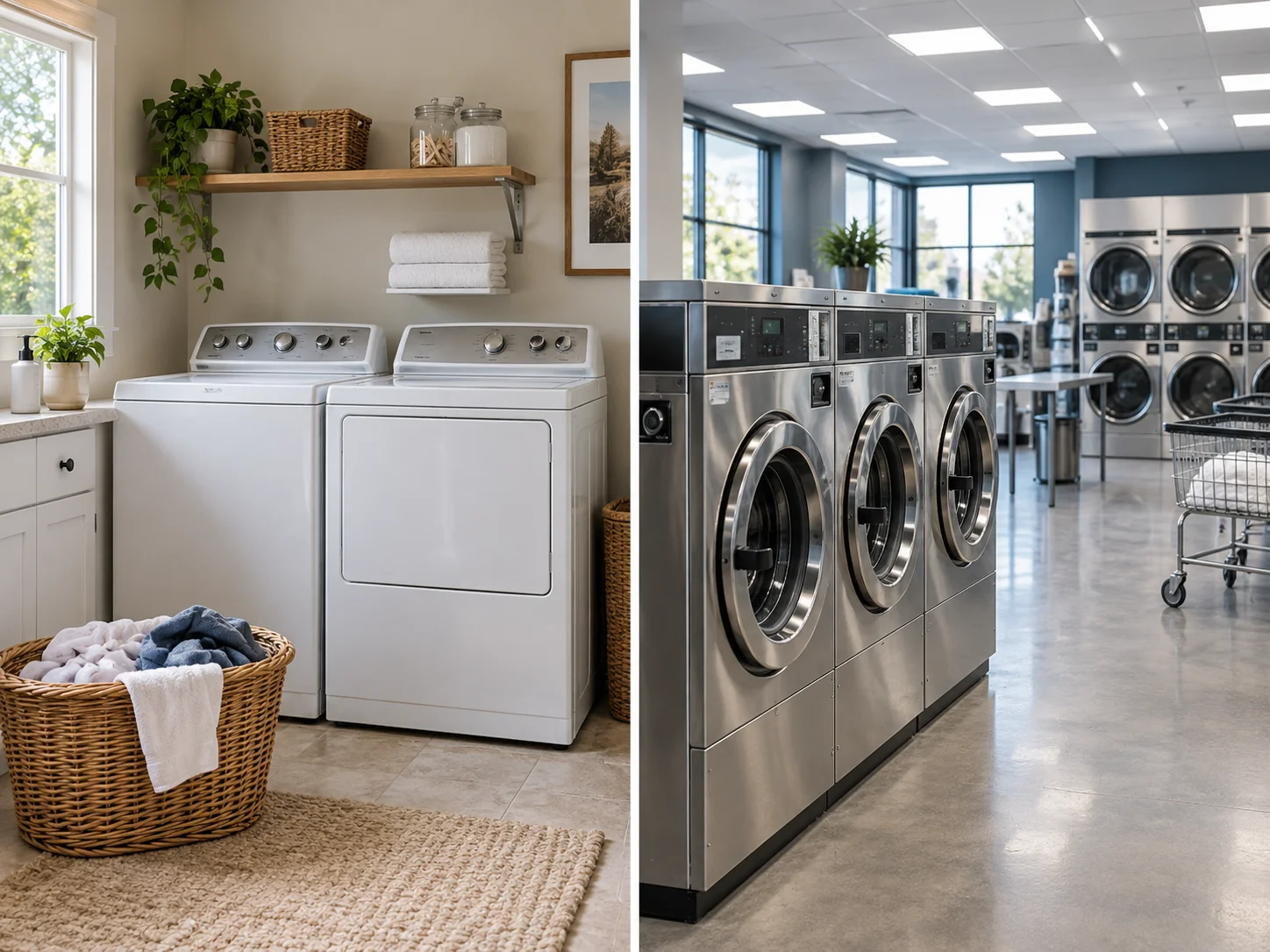
The Cost of the Washer and Dryer
The first hidden cost of home laundry is sitting right there in the laundry room. A washer and dryer are significant household appliances. Even if you already own them, they weren't free, and they won't last forever. The purchase price is only part of the cost. Depending on your setup, you may also have expenses related to delivery, installation, hoses, dryer venting, electrical connections, or gas connections. Eventually, appliances need repairs or replacement.
A laundromat customer doesn't have to worry about any of that. The commercial washers and dryers are the laundromat's equipment to purchase, maintain, repair, and eventually replace. When you pay for a wash or dry cycle at a professional laundromat, part of what you're buying is access to commercial equipment without having to own it yourself.
Water Adds Up Faster Than You Think
Every load of laundry requires water, and the amount varies considerably depending on the washer. Modern high-efficiency machines can use much less water than older traditional top-load washers, but the cost still appears somewhere on your utility bill. If you have a large household and wash several loads every week, those gallons accumulate throughout the year.
And water isn't always the only charge. Depending on where you live, your utility bill may include sewer charges connected to water consumption. That means some of the water going into the washer can effectively contribute to more than one portion of your bill. One load may not seem significant. Fifty, one hundred, or several hundred loads over the course of a year are a different story.
Drying Has Its Own Energy Cost
Getting clothes clean is only half the job. They still have to dry. Electric dryers can be among the more energy-hungry appliances in a home. Gas dryers use electricity as well as natural gas. Actual operating costs depend on the dryer, utility rates, load size, fabric type, and how long it takes clothes to dry.
An inefficient dryer makes the situation worse. A load that needs an extra 20 or 30 minutes because it was overloaded, the washer didn't extract enough water, or the dryer isn't operating efficiently means additional energy consumption.
Commercial laundromat dryers, meanwhile, are designed to handle frequent use and are available in larger capacities. For many customers, that makes it possible to dry larger amounts of laundry together instead of running several separate household dryer cycles.
Detergent Isn't the Only Laundry Product You're Buying
Detergent gets most of the attention, but take a look around the average laundry room. There may be fabric softener, stain remover, oxygen booster, bleach, fragrance products, dryer sheets, wool dryer balls, mesh bags, and specialized detergents. No individual product necessarily breaks the household budget.
Together, however, they become another recurring cost of doing laundry at home. There is also a tendency to use more detergent than necessary. More detergent doesn't automatically mean cleaner clothing and can sometimes leave residue behind.
The little expenses matter because laundry isn't something you do once. It repeats every week, year after year.
Repairs Are Easy to Forget Until Something Breaks
Home appliances have an impressive ability to seem inexpensive right up until they make a noise they absolutely should not be making. Washers have pumps, valves, seals, bearings, electronic controls, and other components that can eventually fail. Dryers have heating components, belts, rollers, sensors, igniters, and ventilation systems that require attention.
Some problems are inexpensive fixes. Others make you wonder whether repairing the machine makes sense at all. Even routine maintenance has a cost, whether measured in money or your own time.
At a professional laundromat, equipment maintenance is someone else's responsibility. If a machine isn't available, you generally choose another one rather than scheduling a service appointment for next Thursday between 8 a.m. and the end of civilization.
Then There Is the Most Valuable Cost: Your Time
This is where the comparison becomes particularly interesting. Home laundry feels convenient because you don't have to leave the house. But household washers and dryers usually handle one load at a time.
Imagine you have four loads waiting. You wash the first load. Transfer it to the dryer. Start the second load. Transfer that one. Start the third. The machines may be doing most of the physical work, but you're still managing laundry for hours. A professional laundromat changes the equation because multiple machines can be used simultaneously.
Instead of processing four loads sequentially, you may be able to wash several at the same time and then move them into multiple dryers. The total elapsed time can be dramatically shorter. That matters on weekends, after work, before a trip, when the kids need clean clothes for Monday, or anytime you'd rather spend your free time doing something other than supervising socks.
Large Loads Can Change the Math
Home machines are convenient for normal everyday laundry. Bulky items are another matter. Comforters, blankets, large bedding sets, and oversized loads may barely fit into a residential washer. Even when they technically fit, packing a washer too tightly can prevent water and detergent from circulating effectively. Professional laundromats typically offer multiple washer sizes, including large-capacity machines designed for loads that would require several cycles at home.
That can make a laundromat particularly useful when you're washing:
-
Comforters and blankets
-
Large bedding sets
-
Towels
-
Family-sized weekly laundry
-
Vacation or travel laundry
-
Seasonal clothing
-
Several accumulated loads at once
One appropriately sized commercial machine may replace multiple household loads. Fewer cycles can mean less time spent waiting for the laundry marathon to finally end.
What About the Convenience of Home Laundry?
Home laundry absolutely has advantages. You don't need to transport your clothes anywhere. You can start a small load whenever you want. And if you already own efficient equipment, have reasonable utility costs, and wash only a few loads each week, doing laundry at home may be very economical. The point isn't that a laundromat always costs less. It doesn't.
The point is that the comparison shouldn't be reduced to "$0 at home" versus the price displayed on a laundromat washer. Home laundry has real costs. They're simply spread across appliance purchases, utility bills, supplies, maintenance, and time instead of appearing as one transaction.
When a Professional Laundromat Makes the Most Sense
Even households with their own washer and dryer can benefit from a laundromat in certain situations. If laundry has accumulated and you need to catch up quickly, access to several machines can turn an all-day project into a much shorter one.
If you're washing bulky bedding, a larger-capacity machine may be a better choice than forcing everything into your home washer.
If your washer or dryer is broken, you don't have to wait days for clean clothes while repairs are scheduled. And if you simply value your weekend, finishing several loads simultaneously can be worth far more than squeezing every possible penny out of your laundry routine.
There Is Another Option: Let Someone Else Do It
For people who really want to calculate the value of their time, there is another step beyond self-service laundry: professional Wash-Dry-Fold service. Instead of spending time washing, drying, and folding, you drop off your laundry and let the professionals handle it.
At Tip Top Laundry, Wash-Dry-Fold is designed for people who want clean laundry without giving up hours of their day to get it. You're not simply paying to operate a machine. You're paying to have the work done for you.
For busy families, professionals, travelers, seniors, and anyone staring at a mountain of laundry wondering where exactly their weekend disappeared, that distinction matters.
Home Laundry vs. Laundromat: Look at the Whole Picture
There isn't one universal winner in the home laundry versus laundromat debate. If you already own efficient appliances and regularly wash small loads, home laundry offers excellent convenience.
If you have several loads, oversized items, limited time, broken equipment, or simply want to get everything finished at once, a professional laundromat can make much more sense. The important thing is to compare the true costs. Think about water. Energy. Detergent. Equipment. Repairs. Maintenance. And, perhaps most importantly, your time.
Laundry is one of those household chores that quietly consumes resources because we're so accustomed to doing it. Sometimes the best option isn't the one with the lowest visible price. It's the one that gives you the best combination of cost, convenience, cleaning performance, and time.
At Tip Top Laundry, our self-service laundromat gives you access to commercial washers and dryers in a range of sizes so you can tackle multiple loads or oversized laundry efficiently. And when you'd rather skip the washing and folding altogether, our Wash-Dry-Fold service can take the job off your hands.
Because clean clothes are necessary. Spending your entire day getting them clean isn't.