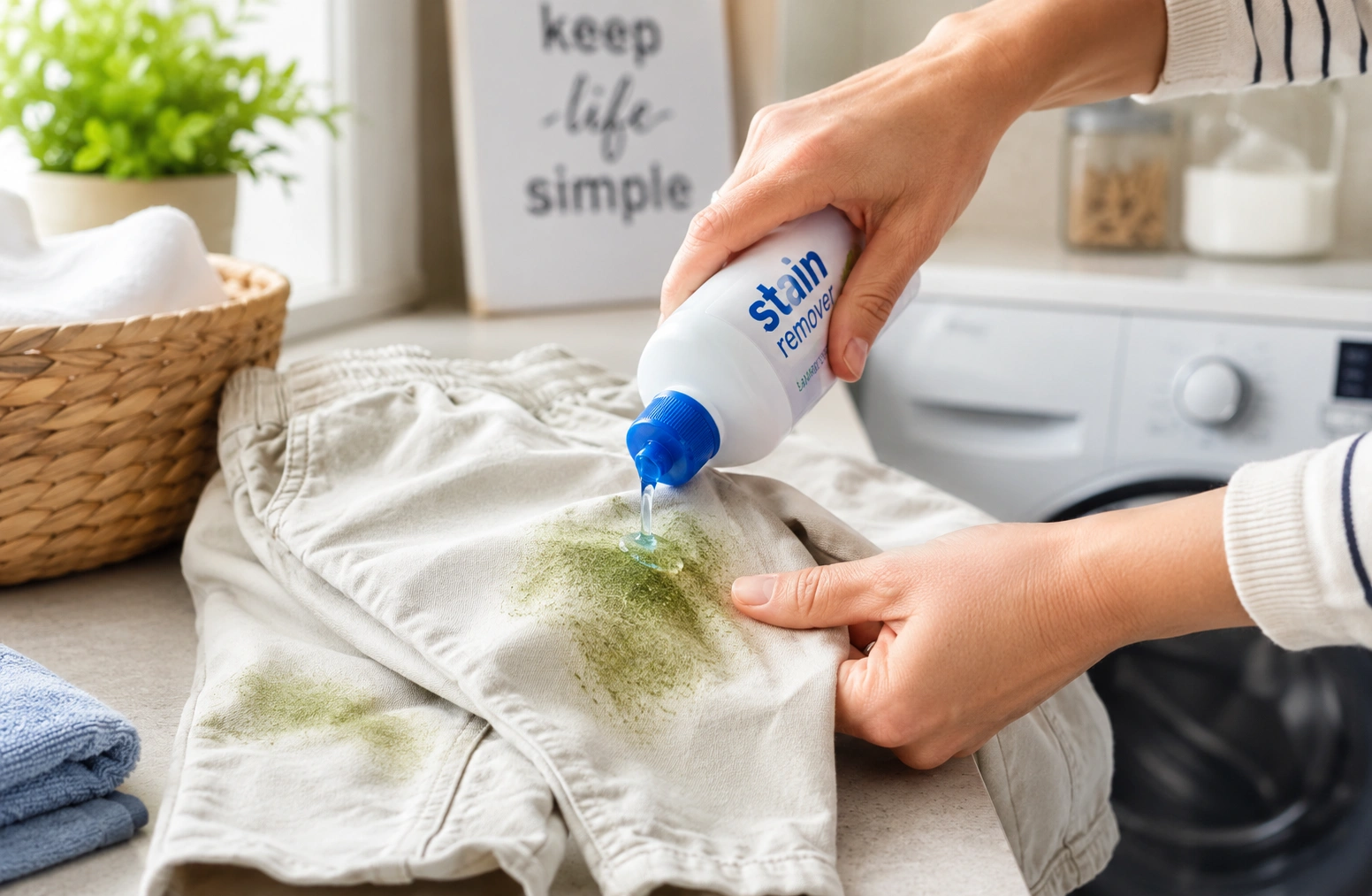
Why Grass Stains Are So Stubborn
Grass stains are tricky because they act more like dye than ordinary dirt. The green color comes from chlorophyll, a natural pigment in plants. When grass is crushed against fabric, especially cotton, denim, polyester blends, or athletic wear, that pigment can bond to the fibers.
To make things more annoying, grass stains often include protein from plant matter and mud from the ground. That means you are not dealing with one stain. You are dealing with a stain cocktail. Naturally, because laundry could not just be normal.
This is why a quick wash cycle may not fully remove the stain. If you toss grass-stained clothing straight into the washer without pre-treating it, the machine may remove some surface dirt but leave behind a faded green shadow. Then, if you put the item in the dryer, the heat can set the stain further into the fabric.
The rule is simple: treat first, wash second, dry only after the stain is gone.
First Step: Act Fast, But Do Not Panic
Fresh grass stains are much easier to remove than old ones. If you can treat the stain the same day, your odds improve dramatically.
Start by gently brushing away any loose dirt or grass. Do not scrub aggressively while the fabric is dry, because that can grind the stain deeper into the fibers. Rinse the stained area from the back of the fabric using cool water. This helps push the stain out instead of driving it further in.
Avoid hot water at the beginning. Heat can make certain parts of the stain harder to remove, especially if there is protein-based residue mixed in with the grass.
What Actually Works on Grass Stains
The best grass stain treatment usually includes three things: surfactants, enzymes, and time. Thrilling, yes, but effective.
Surfactants are cleaning agents found in laundry detergents. They help lift oily and dirty residue away from fabric. Enzymes break down proteins and organic matter. Since grass stains include plant material, enzyme-based detergents are especially useful.
Here is a reliable home method:
-
Rinse the stain with cool water from the back of the fabric.
-
Apply a liquid laundry detergent with enzymes directly to the stain.
-
Gently work it in with your fingers or a soft brush.
-
Let it sit for 10 to 15 minutes.
-
Wash according to the care label.
-
Check the stain before drying.
That final step matters. If the stain is still visible, do not put the item in the dryer. Repeat the treatment instead. The dryer is where stains go to become permanent little monuments to human optimism.
Does Baking Soda Help?
Baking soda can help a little, but it is not enough by itself for most grass stains.
Baking soda is mildly abrasive and can help loosen some surface residue. It can also help with odors. But it does not contain enzymes, and it is not a strong stain remover for plant pigments like chlorophyll. If you make a paste with baking soda and water, it may lighten a fresh, mild stain. But for real grass stains, especially on white pants, sports uniforms, or denim, baking soda alone is usually not the hero.
A better option is using baking soda as a supporting player. For example, after applying liquid detergent, you can sprinkle a little baking soda over the treated area and gently work it in. But the detergent is doing the heavy lifting. Baking soda is just standing nearby trying to look useful.
What About Vinegar?
White vinegar is another popular home remedy. It can help with some stains and odors, but it is not always the best first choice for grass stains. Vinegar is acidic, and while it may loosen some residue, it does not break down grass proteins the way enzyme detergent does.
Also, vinegar should not be mixed with bleach. Ever. Mixing cleaning products is not “advanced stain removal.” It is indoor chemistry roulette.
If you want to try vinegar, use it separately. Dab a small amount of diluted white vinegar onto the stain, let it sit briefly, rinse, and then follow with detergent. Always test on a hidden area first, especially on delicate or brightly colored fabrics.
What About Rubbing Alcohol?
Rubbing alcohol can help break down chlorophyll pigments, which is why it sometimes works well on grass stains. But it can also affect dyes in clothing, especially darker fabrics or delicate materials.
To use it safely, test a small hidden area first. If the fabric color does not change, dab rubbing alcohol onto the stain with a clean white cloth. Do not pour it everywhere like you are blessing the laundry. Blot gently, rinse with cool water, then treat with enzyme detergent and wash.
This method is better for durable fabrics like cotton or denim. Skip it for silk, wool, rayon, acetate, or anything with a care label that looks expensive and judgmental.
Best Treatment for White Clothes
White clothing makes grass stains especially dramatic, because apparently stains enjoy being theatrical.
For white cotton or durable white fabrics, start with enzyme detergent. If the stain remains, use an oxygen-based bleach according to the product directions. Oxygen bleach is usually safer for many washable fabrics than chlorine bleach, but you still need to check the care label.
Avoid chlorine bleach on wool, silk, spandex, and many performance fabrics. It can weaken fibers, cause yellowing, or damage elastic. Nothing says “laundry mistake” like a white shirt that somehow becomes worse after treatment.
Best Treatment for Sports Uniforms
Grass stains love sports uniforms. Baseball pants, soccer shorts, football jerseys, and athletic socks all seem designed to collect green marks like badges of chaos.
For uniforms, pre-treatment is everything. Apply enzyme detergent or a sports-safe stain remover directly to the grass stains before washing. Let the product sit long enough to work, but do not let it dry completely on the fabric. Wash in the warmest water allowed by the care label.
For polyester and performance fabrics, avoid fabric softener. It can coat moisture-wicking fibers and trap odors. It may also make future stain removal harder. Humanity invented performance fabric and then immediately invented ways to ruin it. Inspiring.
Common Grass Stain Mistakes
The biggest mistake is drying the garment before the stain is gone. Heat can set the stain, making it much harder to remove later.
Another mistake is scrubbing too hard. Aggressive scrubbing can damage fabric and spread the stain. Gentle pressure works better than rage-cleaning, even though the rage is understandable.
A third mistake is relying on one ingredient, especially baking soda alone. Grass stains need a real cleaning strategy. Think enzyme detergent, stain remover, soaking time, and patience.
Finally, do not ignore the care label. Some fabrics cannot handle strong stain treatments. Delicates, wool, silk, and certain dyes need special care.
When to Call Tip Top Laundry
Some stains are worth handling at home. Others are worth handing off before you accidentally turn one stain into a full garment tragedy.
Tip Top Laundry can help with stubborn grass stains, sports uniforms, kids’ clothes, workwear, and everyday laundry that needs more than a basic wash. Professional laundry care is especially useful when the stain is old, the fabric is delicate, or the item has already been washed and dried.
If you are dealing with repeated grass stains from sports, outdoor work, summer camp, school uniforms, or kids who believe sliding across lawns is a personality trait, regular laundry service can save time and extend the life of your clothes.
The Bottom Line
Grass stains are stubborn, but they are not unbeatable. The key is to act quickly, rinse with cool water, pre-treat with enzyme detergent, avoid the dryer until the stain is gone, and stop expecting baking soda to perform miracles alon
Baking soda can help a little. Vinegar can sometimes help. Rubbing alcohol may help with green pigment on durable fabrics. But the most reliable solution is an enzyme-based stain treatment followed by the right wash cycle.
And when the stain refuses to leave, Tip Top Laundry is ready to step in. Because life is too short to spend it negotiating with pants.