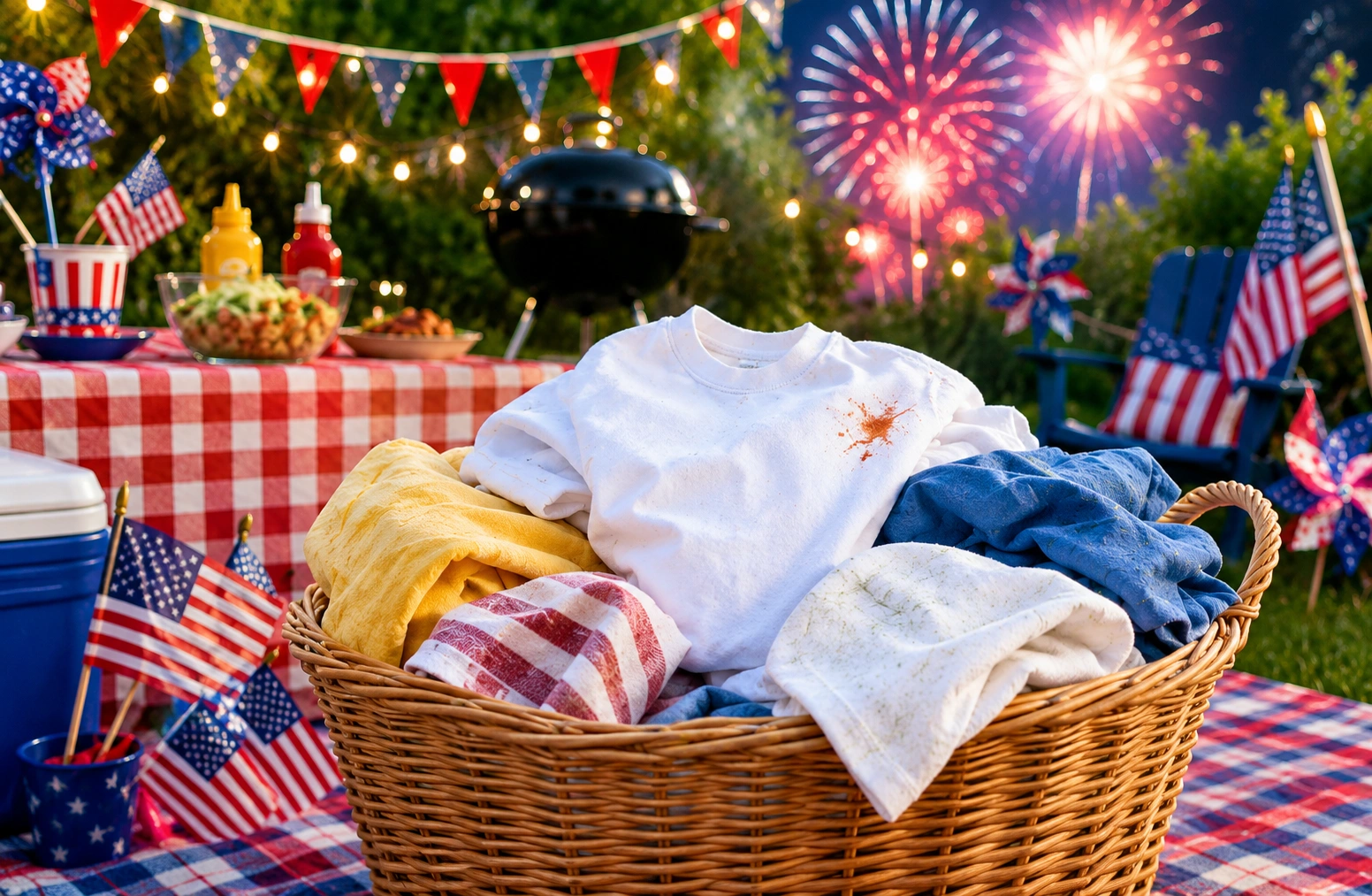
The First Rule of Fourth of July Stains: Act Fast
Holiday stains are easier to remove when they are fresh. Before you start the laundry, sort stained items from unstained ones and check each piece carefully. Bright sauces, greasy foods, smoke residue, and sugary drinks can spread or set if they are washed incorrectly.
Before treating any stain, scrape off solids gently with a spoon or dull knife. Blot liquids with a clean cloth. Do not rub aggressively, unless your goal is to grind the stain deeper into the fabric like a tiny patriotic disaster.
Always check the care label before using hot water, bleach, or stain removers. When in doubt, use cold water first. Heat can set many food and protein-based stains, making them harder to remove.
How to Remove BBQ Sauce Stains
BBQ sauce is one of the classic Fourth of July laundry enemies. It usually contains tomato, sugar, spices, oils, and sometimes smoke flavoring, which means it can leave both color and grease behind.
Start by removing any extra sauce from the fabric. Rinse the stain from the back with cold water to push it out instead of driving it further in. Apply liquid laundry detergent directly to the stain and gently work it in with your fingers or a soft brush. Let it sit for 10 to 15 minutes.
For stubborn BBQ stains, use an oxygen-based stain remover that is safe for the fabric. Wash according to the care label, then check the stain before drying. If you still see discoloration, repeat the treatment. Do not put the garment in the dryer until the stain is gone.
How to Remove Mustard Stains
Mustard stains are rude little yellow monsters. They are especially difficult because mustard often contains turmeric, a natural dye that clings to fabric.
Blot the stain gently and rinse with cold water from the back of the fabric. Apply liquid detergent or a stain remover and let it sit for several minutes. For white or colorfast fabrics, an oxygen-based soak can help lift the yellow color.
Avoid using hot water at the beginning. Hot water may help set the stain, which is exactly what nobody needs after a party full of paper plates and questionable potato salad choices.
How to Remove Ketchup and Tomato-Based Stains
Ketchup, salsa, and tomato-based dips are common holiday offenders. Like BBQ sauce, they can leave behind both color and acidity.
Scrape off any excess, then rinse the fabric with cold water. Apply detergent directly to the stain and let it sit. Wash as usual, but inspect the item before drying. If the stain remains, repeat the treatment with a stain remover or oxygen-based soak.
For tablecloths and napkins, treat stains before washing the entire load. One untreated ketchup stain can become a permanent souvenir of someone’s hot dog enthusiasm.
How to Remove Grease and Burger Stains
Grease stains from burgers, ribs, hot dogs, chips, and grilled foods may not look dramatic at first, but they can darken after washing and drying
Sprinkle a small amount of baking soda or cornstarch on fresh grease stains to absorb excess oil. Let it sit for several minutes, then brush it away. Apply dish soap or liquid laundry detergent to the spot and gently massage it in. Dish soap works well on oil-based stains because it is designed to break down grease.
Wash in the warmest water safe for the fabric. Check before drying. Grease stains can hide when wet, so hold the item up to the light before declaring victory.
How to Remove Fireworks Smoke, Ash, and Soot
Fireworks are beautiful in the sky and deeply annoying on clothing. Smoke, ash, and soot can settle into shirts, jackets, blankets, and towels, especially if you sit near the fireworks area or a fire pit.
Take smoky or ash-covered items outside and shake them out first. Brush off loose particles gently. Do not rub soot with water right away, because it can smear. Once loose residue is removed, pretreat dark marks with detergent or stain remover.
Wash smoky clothes separately from lightly worn items. Add baking soda to the wash to help reduce odor, and air dry if possible. If the smoke smell remains, wash again before drying. The dryer can lock in odors, because apparently even machines enjoy betrayal.
How to Remove Grass Stains
Backyard games, lawn chairs, and kids running around before fireworks can lead to grass stains on shorts, dresses, socks, and picnic blankets.
Pretreat grass stains with liquid detergent or an enzyme-based stain remover. Gently work the product into the fabric and let it sit before washing. Grass stains contain natural pigments, so they need time to break down.
Wash as directed on the care label. For white socks or durable fabrics, an oxygen-based soak can help brighten and remove leftover green marks.
How to Remove Sunscreen Stains
Sunscreen protects your skin, but it can leave oily or yellowish marks on clothing, especially around collars, sleeves, and swimsuit cover-ups.
Pretreat sunscreen stains with liquid detergent or a grease-fighting stain remover. Let it sit before washing. Avoid chlorine bleach on sunscreen stains, especially if the sunscreen contains ingredients that may react and cause yellowing on white fabrics.
Wash sunscreen-stained items separately from delicate whites when possible. For beach towels and cover-ups, use a full wash cycle with enough detergent to handle body oils, sweat, and sunscreen residue.
How to Remove Drink Spills
Lemonade, soda, punch, beer, wine, and sports drinks can leave sticky stains that attract dirt if ignored. Red, blue, and orange drinks are especially dangerous for light fabrics.
Blot the spill immediately with a clean towel. Rinse with cold water, then pretreat with detergent or stain remover. Wash normally and check before drying. For sugary spills, even if the color disappears, wash the item soon. Sugar left in fabric can discolor over time.
How to Remove Ice Cream and Popsicle Stains
Frozen treats are fun until they melt down a child’s shirt or onto your patio cushions. Popsicles often contain dyes, while ice cream adds dairy and sugar to the mess.
Rinse with cold water first. For ice cream, use an enzyme-based detergent or stain remover to help break down the protein. For brightly colored popsicles, pretreat and soak in oxygen-based cleaner if the fabric allows.
Avoid hot water at the start for dairy stains. Cold water is your friend here, which is nice because someone should be.
Build a Fourth of July Laundry Emergency Kit
Before your next holiday party, set up a simple stain station. Keep clean white cloths, paper towels, liquid detergent, stain remover, baking soda, dish soap, and a soft brush nearby. A little preparation can save clothes before stains dry and settle.
This is especially useful for families, backyard hosts, and anyone brave enough to serve ribs to people wearing white.
Post-Party Laundry Tips
After the celebration, sort laundry by stain type and fabric color. Do not overload the washer. Stained clothes need room to move so detergent can reach the fabric properly.
Use the right water temperature for each stain and fabric. Cold water is best for many fresh stains, while warm water can help with greasy items if the care label allows it. Always check stained pieces before putting them in the dryer.
For large loads of towels, tablecloths, picnic blankets, and clothes, consider using a professional wash-and-fold laundry service. After hosting a Fourth of July party, nobody deserves to spend the next day wrestling with smoky towels and sauce-covered shirts.
Keep the Celebration, Lose the Stains
Fourth of July stains may be festive, but they do not have to be permanent. With fast action, proper pretreatment, and the right washing method, you can handle BBQ sauce, fireworks smoke, grass, sunscreen, drinks, and party spills without sacrificing your favorite summer outfits.
Celebrate the holiday, enjoy the food, watch the fireworks, and let your laundry routine handle the aftermath. Freedom from stains may not be in the Constitution, but it should be.