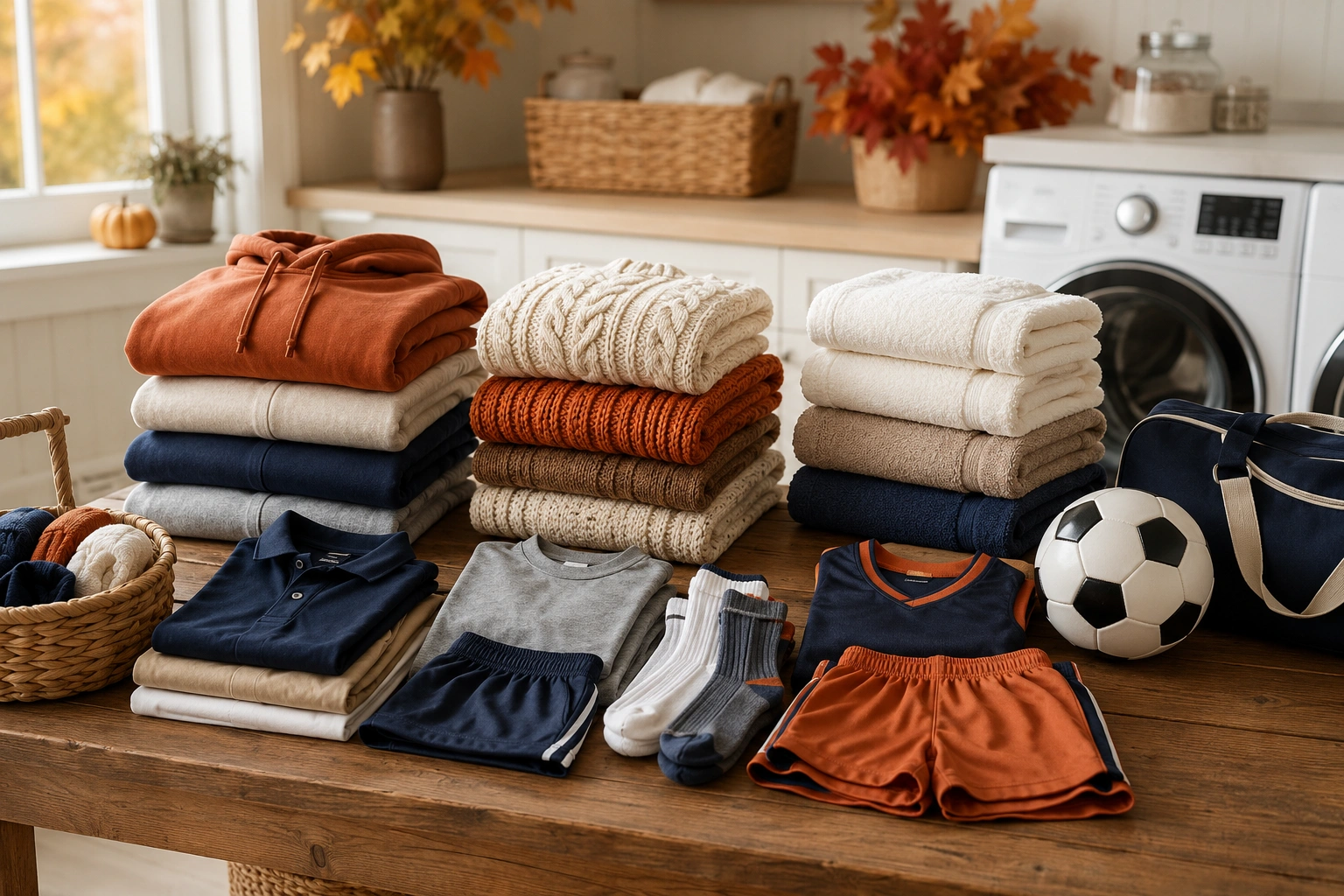
Why Fall Creates So Much More Laundry
More Layers Mean More Clothes
A summer outfit may include a shirt, shorts, socks, and underwear. A fall outfit can add jeans, an undershirt, a sweatshirt, or a jacket. Even in Arizona, cooler mornings and air-conditioned classrooms bring sweaters and hoodies back into rotation.
More pieces fill hampers faster. Heavier fabrics also take up more washer space, hold more water, and need longer to dry.
Back-to-School Schedules Remove Laundry Time
Fall calendars fill with school, work, sports, activities, and appointments. The laundry windows that existed during summer disappear, but the clothing keeps arriving.
Loads get started late, forgotten in the washer, and left in baskets for days. Clean clothing becomes a second wardrobe on the couch while dirty clothing continues piling up. This is often a capacity problem, not a personal failure.
Two Seasonal Wardrobes Are Active at Once
Fall in Glendale, Phoenix, and the West Valley does not arrive with a neat weather change. Your family may need shorts in the afternoon and a sweatshirt in the morning. Pool towels may still be used while school clothes, jeans, and sports gear return.
Households temporarily use both seasonal wardrobes, creating more active clothes, sorting, and crowded storage.
Heavy Fabrics Slow Every Load
Jeans, sweatshirts, blankets, flannel, and thick towels absorb more water than summer clothing. Packing them into one oversized load may look efficient, but an overloaded washer cannot clean or rinse properly, and the dryer needs longer to remove moisture.
One overloaded load can take longer than two correctly sized loads and still come out damp or musty.
Fall Adds New Stains and Odors
School lunches, coffee, grass, mud, sports practices, and art projects create plenty of stains. Damp towels, sweaty uniforms, and hoodies left in backpacks or gym bags can develop stubborn odors quickly.
Once clothing sits stained or damp too long, it may need pretreatment or rewashing, adding more work to the routine.
How to Fix Your Fall Laundry Routine
Begin With a Seasonal Reset
Put away summer clothing that is no longer worn regularly. Remove outgrown school clothes, worn-out socks, and anything that does not need to remain in active rotation.
Check care labels on sweaters, jackets, blankets, and other fall fabrics. Knowing which items need cold water, gentle washing, air drying, or special care prevents rushed decisions and expensive mistakes.
Sort Laundry by Purpose
A single overflowing hamper forces you to sort everything before every load. A better fall system separates laundry according to urgency and fabric type:
-
Everyday clothing
-
School or work uniforms
-
Sports gear or heavily soiled items
-
Towels and bedding
-
Sweaters and delicates
Divided hampers, labeled bags, or quick sorting at the washer can all work. The next necessary load should be obvious.
Choose Fixed Laundry Days
"Wash clothes when the hamper is full" sounds flexible, but it usually creates emergency loads. Choose dependable laundry anchors instead.
Wash school and work clothes on Tuesday, everyday clothing on Thursday, and towels and bedding over the weekend. Sports gear can be washed after the final practice or game of the week.
Fixed days keep essential clothing from becoming buried under less urgent items and reduce daily decision-making.
Use Smaller, Purpose-Built Loads
Clothing should fit loosely enough to move inside the washer. Group similar fabric weights so lightweight shirts are not trapped inside heavy jeans, towels, or sweatshirts.
Keep lint-producing towels away from lint-attracting clothes. Wash muddy or sweaty sports gear separately. Turn dark clothing inside out, close zippers, secure hook-and-loop fasteners, and empty pockets.
Smaller, correctly sorted loads usually clean better, dry faster, and need less rewashing.
Create a Five-Minute Evening Reset
Before bed, empty gym bags and backpacks, hang damp clothing and towels, treat visible stains, and check whether uniforms or work clothes are needed the next morning.
This takes less time than discovering a wet uniform or stained shirt ten minutes before leaving the house. It also prevents damp odors and hidden clothing.
Treat Stains Before the Hamper
Do not let stained clothing disappear into a pile for several days. Blot excess liquid, rinse with cool water when appropriate, and apply a fabric-safe stain treatment.
Avoid putting a stained garment in the dryer until the mark is gone because heat can make many stains harder to remove. Grass, mud, food, ink, body oils, and grease are easier to handle while fresh.
Protect Sweaters and Fall Fabrics
Sweaters do not always need washing after one wear. If one is clean and odor-free, air it out before storing it again.
When washing knitwear, follow the care label. Use cool water, a gentle cycle, and mild detergent when permitted. Reshape sweaters while damp and dry them flat. Hanging a wet sweater can stretch it, while high heat can cause shrinking or fiber damage.
Denim, fleece, flannel, and lined hoodies also benefit from proper sorting and lower drying temperatures.
Schedule Towels and Bedding Separately
Towels and bedding can overwhelm clothing loads when they are washed only after supplies run low. Give them a predictable place in the week.
Choose one day for sheets and another load for towels and washcloths. Hang damp towels between uses, and make sure everything is completely dry before storing them.
Simplify Folding and Putting Clothes Away
Laundry is not finished when the dryer stops. If clean clothing repeatedly sits in baskets, putting it away is the real bottleneck.
Sort clothes by person as they leave the dryer. Give each family member a basket, hang wrinkle-prone items immediately, and stop expecting perfect folds for pajamas, underwear, or cleaning towels.
A simple system that gets clothing into drawers is better than a perfect one that creates a three-day delay.
Share Specific Jobs
"Help with laundry" is too vague. One person can gather and sort, another can transfer loads, and each household member can put away their own clothes.
Children can match socks, carry laundry, check pockets, or place clothes in drawers depending on their age. Clear jobs keep one person from managing every step.
A Realistic Weekly Fall Laundry Schedule
A simple plan might be:
-
Tuesday: School clothes, uniforms, and workwear.
-
Thursday: Everyday clothing and sports gear
-
Saturday: Towels and bedding
-
As needed: Sweaters, delicates, and special-care items
The exact days matter less than consistency. Start with essential clothing, then schedule bulky and lower-priority items separately.
If wet loads are forgotten, set a phone reminder. If clean clothes pile up, schedule a ten-minute household put-away session. Fix the step that keeps failing instead of rebuilding the entire routine.
When a Laundry Service Makes Sense
Sometimes fall creates more laundry than your household has time to process. Wash-and-fold laundry service can remove recurring clothing, towel, and household loads from your list. Pickup and delivery laundry service can also eliminate the driving and waiting.
Tip Top Laundry serves busy households in Glendale, Phoenix, Peoria, and communities across the West Valley. Whether you use our self-service laundromat, professional wash-and-fold service, or pickup and delivery, outsourcing even one or two loads can keep the rest of your routine under control.
Frequently Asked Questions About Fall Laundry
Why Does Laundry Increase in the Fall?
Families wear more layers and use heavier fabrics, school and sports gear, blankets, and bedding. Busier schedules also leave less time for washing, drying, folding, and putting everything away.
Should Sweaters Be Washed After Every Wear?
Usually not unless they are stained, sweaty, or worn directly against the skin. Airing sweaters between wears and following the care label can protect their shape and fibers.
What Is the Fastest Way to Catch Up?
Wash essential clothing first, followed by towels, bedding, and lower-priority items. Use properly sized loads sorted by fabric weight. For a large backlog, wash-and-fold service can provide a faster reset.
Build a Routine That Fits the Season
Your fall laundry routine does not need to look like your summer routine. More layers, heavier fabrics, school schedules, sports activities, and seasonal bedding change the workload.
Sort laundry by urgency, choose fixed washing days, treat stains early, protect fall fabrics, and divide the work into specific jobs. When the schedule is simply too full, Tip Top Laundry can help keep clean clothes moving without letting laundry take over your week.