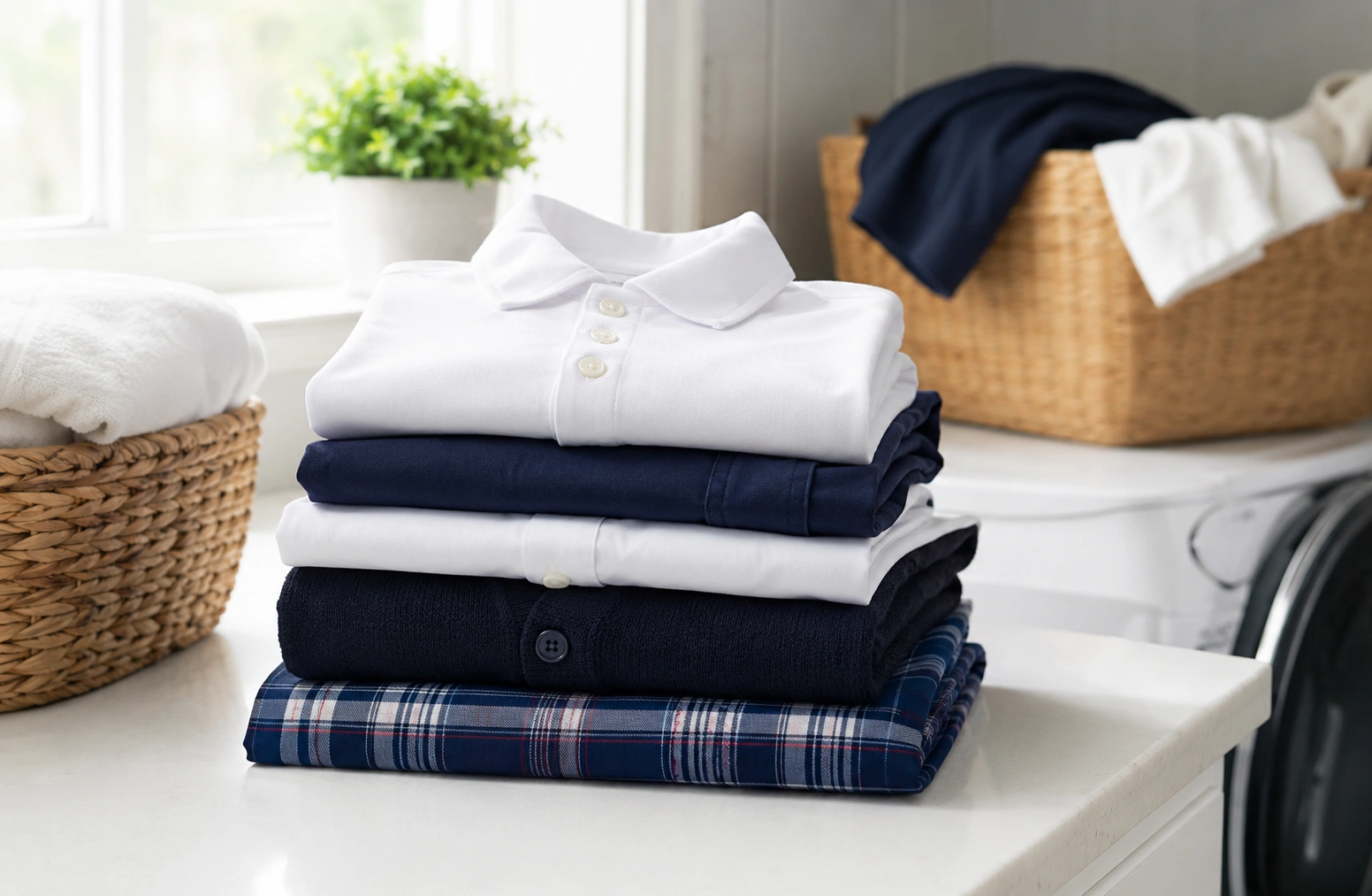
1. Check the Care Label First
Before tossing uniforms into the washer, check the care label. It may feel like a tiny fabric tag trying to boss you around, but it actually matters. School uniforms are often made from cotton blends, polyester, wool blends, or performance fabrics. Each material reacts differently to heat, detergent, and drying.
Most school polos, shirts, pants, skirts, and jumpers can be machine washed, but some blazers, cardigans, ties, or embroidered items may need gentler care. Look for instructions about water temperature, bleach, tumble drying, and ironing.
When in doubt, choose cold water, mild detergent, and a gentle cycle. This is the laundry equivalent of not making things worse, which is underrated.
2. Sort Uniforms by Color and Fabric
Uniforms may look simple, but mixing everything together can cause fading, color transfer, and fabric damage. Wash white shirts separately from dark pants, navy skirts, red sweaters, or plaid jumpers. Dark colors can bleed, especially when they are newer.
A good sorting system looks like this:
-
White shirts and polos in one load.
-
Dark pants, shorts, and skirts in another.
-
Sweaters, cardigans, and delicate items washed separately.
-
Sports uniforms and heavily soiled clothes kept away from everyday uniforms.
Sorting also helps prevent rough fabrics, zippers, and buttons from rubbing against softer shirts. That friction can lead to pilling, snags, and worn-out collars.
3. Treat Stains Before Washing
The washer is helpful, but it is not a magical portal where ketchup and marker stains go to reconsider their life choices. Stains need attention before the uniform goes into the machine.
🍛 For food stains, gently remove any excess first. Apply a small amount of liquid detergent or stain remover directly to the mark, then let it sit for 10 to 15 minutes before washing.
🌿 For grass stains, use a stain remover or a mix of detergent and water. Rub gently with your fingers or a soft brush. Avoid scrubbing too hard, especially on polos and delicate fabrics.
✒️ For ink stains, blot the area carefully. Do not rub, because that spreads the ink. A little rubbing alcohol on a cotton pad may help, but test it on a hidden area first.
🧼 For sweat and odor, pre-soak shirts in cool water with detergent before washing. For sweat and odor, pre-soak shirts in cool water with detergent before washing.
The biggest rule: never put stained uniforms in the dryer until the stain is gone. Heat can set the stain permanently, and then congratulations, the shirt now has a personality.
4. Wash School Uniforms in Cold Water
Cold water is usually the best choice for washing kids’ school uniforms. It helps prevent shrinking, fading, and color bleeding. It is also gentler on fabric, which matters when the same shirts and pants are washed every single week.
Hot water can be useful for certain heavily soiled white items, but it can also weaken fibers and cause colors to fade faster. For most uniforms, cold water gets the job done while protecting the fabric.
Use warm water only when the care label allows it and when the uniform is especially dirty. For everyday washing, cold is safer.
5. Use a Gentle Detergent
A mild detergent is best for school uniforms, especially for kids with sensitive skin. Strong detergents, too much detergent, or harsh additives can leave residue behind, making clothes feel stiff or irritating.
Use the recommended amount on the detergent label. More detergent does not mean cleaner clothes. It usually means soap buildup, dull fabric, and a washing machine that silently judges everyone involved.
For uniforms with odors, choose a detergent designed to remove sweat and body oils. For bright whites, use oxygen-based brighteners instead of chlorine bleach when possible. Chlorine bleach can weaken fabric and may cause yellowing over time.
6. Turn Uniforms Inside Out
Before washing, turn polos, shirts, pants, skirts, and sweaters inside out. This simple step helps protect the outer surface from friction, fading, and pilling.
It is especially helpful for embroidered logos, printed school crests, pleats, and darker fabrics. Turning clothes inside out also helps preserve color and keeps uniforms looking newer for longer.
Button shirts, zip zippers, and fasten Velcro before washing. Open zippers and rough fasteners can snag other garments. Tiny laundry chaos, avoided.
7. Use the Right Wash Cycle
Most school uniforms do best on a normal or gentle cycle. Use a gentle cycle for sweaters, cardigans, blazers, pleated skirts, and items with embroidery or special details.
Avoid overloading the washer. Clothes need room to move so detergent and water can clean them properly. An overloaded machine can leave uniforms dirty, wrinkled, and poorly rinsed.
A smaller, properly loaded wash is better than one giant load where everything emerges looking like it lost a fight.
8. Skip Fabric Softener on Performance Fabrics
Fabric softener can make clothes feel nice, but it is not always helpful. On performance fabrics, sports uniforms, or moisture-wicking materials, fabric softener can leave a coating that traps odors and reduces breathability.
It can also build up on regular uniforms over time, making fabric less absorbent and sometimes dull-looking. For softer uniforms, try using the correct detergent amount and avoid over-drying.
9. Air Dry When Possible
Drying is where many uniforms lose their shape. High heat can shrink shirts, fade colors, weaken elastic, and damage logos or embroidery.
Air drying is the best option for making school uniforms last longer. Hang shirts on hangers, lay sweaters flat, and hang pants or skirts by the waistband. This helps uniforms keep their shape and reduces wrinkles.
If you use a dryer, choose a low heat setting and remove uniforms while they are still slightly damp. Then hang them to finish drying. This reduces heat damage and makes ironing easier.
10. Iron Carefully
Some uniforms need ironing to look neat, especially button-down shirts, pleated skirts, and dress pants. Always check the care label before ironing.
Use the right heat setting for the fabric. Cotton can usually handle more heat than polyester blends, but many uniforms contain synthetic fibers that can melt or shine under high heat. For embroidered logos or printed designs, iron inside out or place a thin cloth between the iron and the garment.
For pleated skirts, follow the original pleat lines and press gently. Do not drag the iron around like you are trying to erase evidence.
11. Store Uniforms Properly
How uniforms are stored matters, too. Hang shirts, blazers, skirts, and pants when possible. Fold sweaters and cardigans to prevent stretching at the shoulders.
Make sure uniforms are completely dry before putting them away. Damp clothing can develop mildew smells, and nobody needs their child walking into class smelling like an abandoned gym bag.
Keep a designated uniform section in the closet or drawer. This makes school mornings easier and helps prevent uniforms from being mixed in with play clothes, pajamas, or that one random sock no one will claim.
12. Build a Weekly Uniform Laundry Routine
A simple routine can save stress. Try washing uniforms midweek and again over the weekend, depending on how many sets your child has. Treat stains as soon as possible, even if you do not wash the item right away.
Keep a small stain remover near the laundry basket so stained uniforms do not sit untreated for days. Ask kids to empty pockets before putting uniforms in the hamper. Crayons, tissues, coins, and snack wrappers do not improve a wash cycle, despite what children seem determined to prove.
13. Know When to Use Professional Laundry Help
Busy school weeks can make laundry feel endless. If uniforms are piling up, stains are getting stubborn, or delicate items need extra care, a professional laundry service can help.
Tip Top Laundry can take the pressure off your weekly routine by cleaning, drying, and folding school uniforms with care. That means fewer rushed Sunday-night laundry emergencies and more clean uniforms ready for the week ahead.
Final Thoughts
The best way to wash kids’ school uniforms is to treat stains early, wash in cold water, use gentle detergent, turn garments inside out, avoid high heat, and store everything properly. These small steps help prevent fading, shrinking, pilling, and wear.
School uniforms work hard. With the right laundry routine, they can last longer, look better, and survive the school year with fewer replacements. And considering what kids put their clothes through, that is basically a small domestic miracle.